Pouring or removing structural slabs in Raleigh demands tools built for high-density aggregate and dense Piedmont red clay. A 14-inch walk-behind concrete saw cuts slab depths up to 5 inches for garage apron expansions…
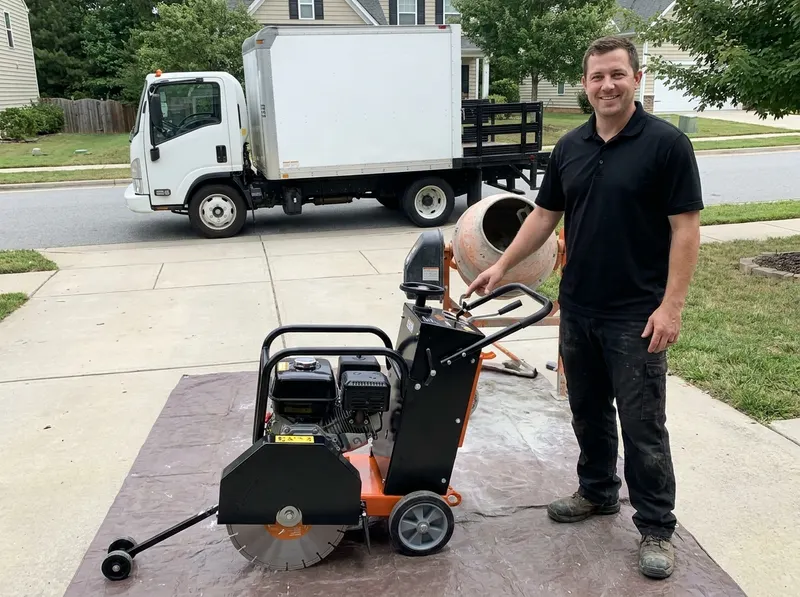
Pouring or removing structural slabs in Raleigh demands tools built for high-density aggregate and dense Piedmont red clay. A 14-inch walk-behind concrete saw cuts slab depths up to 5 inches for garage apron expansions in Five Points or trenching plumbing lines through foundation pads in Oakwood. Handheld cut-off saws suit vertical block cuts and brick lintel adjustments, while heavy-duty demolition hammers running on standard 15-amp or 20-amp circuits break apart patio sections without the transport footprint of a towable air compressor. Selecting an electric breaker eliminates toxic exhaust in enclosed basements near Glenwood South, whereas gas-powered saws provide untethered cutting along long driveways in North Hills and Wakefield. The operational trade-off centers on power source versus ventilation: gas equipment cuts faster through cured 4,000 PSI mixes but requires open-air airflow, while electric equivalents need dedicated 120-volt circuits within 50 feet to avoid voltage drops that trip breakers mid-cut.
Demolition and masonry preparation in historic neighborhoods like Boylan Heights, Mordecai, and the Village District require precise footprint control. Tight lot lines and shared driveways leave zero room for uncoordinated freight drops or oversized flatbeds blocking street lanes. Equipment delivery utilizes direct-dispatch routing along major corridors like Capital Boulevard and Glenwood Avenue, placing compactors, power trowels, and concrete mixers exactly where the pour happens. Subgrade preparation requires a forward plate compactor exerting 3,000 pounds of centrifugal force over crushed stone bases before any pour can pass local Wake County residential code inspections. When planning projects, contractors account for the reality that blade wear charges apply per 1/32-inch of diamond segment consumed on heavy granite-aggregate aggregate, making water-hookup compliance necessary to suppress crystalline silica dust under OSHA standard 1926.1153.
Every job gets a firm, written price after a free on-site visit.
Tell us about your concrete & masonry tool rental job in Raleigh and we'll send a clear, written quote, usually the same day.
 Hawk Hill Dumpster Rental