Staging structural materials requires matching the lifting mechanism to the physical constraints of the local job site. A rough-terrain telehandler with a 36-foot boom reach suits a structural framing remodel in North…
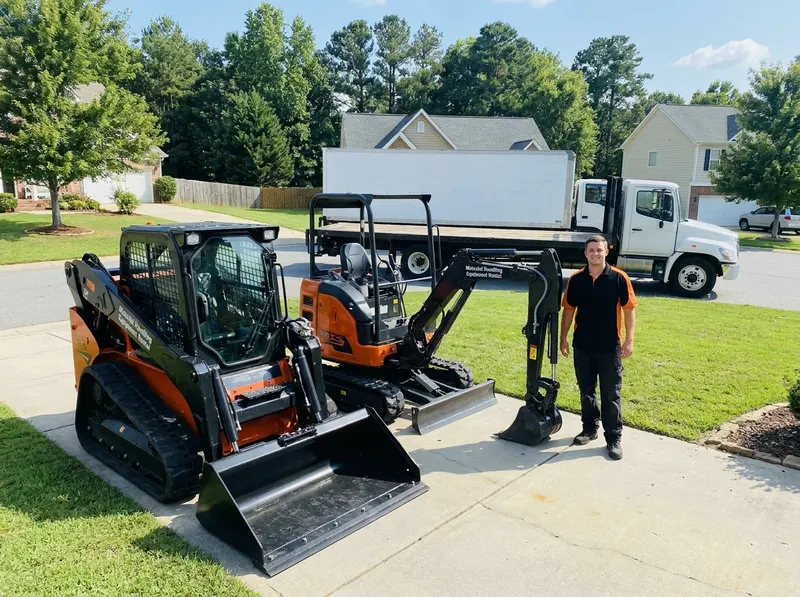
Staging structural materials requires matching the lifting mechanism to the physical constraints of the local job site. A rough-terrain telehandler with a 36-foot boom reach suits a structural framing remodel in North Hills or a two-story roofing tear-off in Wakefield; a compact walk-behind electric stacker or 2,500-lb capacity motorized pallet jack fits tight garage interiors and interior remodels across Five Points or Glenwood South. The operational trade-off centers on ground footprint versus raw reach: an articulating forklift moves 8,000 lbs across unpaved site grade but requires a 14-foot clearance turning radius, whereas a mini skid steer fitted with pallet forks carries 1,500 lbs through narrow side gates without fracturing aggregate driveways.
Navigating Raleigh work zones requires strict attention to curb weights, right-of-way clearances, and surface integrity. Historic properties along Oakwood Avenue and historic Boylan Heights often feature narrow 8-foot driveways, vintage clay pavers, and low-hanging mature pecan canopies that cannot accommodate full-sized rough-terrain telehandlers. In these restricted parcels, operators deploy compact rubber-tracked loaders with pallet attachments to disperse ground pressure below 4.5 PSI, preventing the sub-base damage common with steel-wheeled alternatives. Commercial jobs near the Village District or mixed-use conversions off North Carolina State Capitol corridors require documented equipment drops to avoid blocking public rights-of-way, while Brier Creek and Mordecai sites frequently balance tight property boundary offsets against active delivery staging zones.
Direct mobilization bypasses third-party broker platforms that aggregate reservations without local equipment access. Securing equipment follows three concrete steps: 1. Call (984) 254-0019 to specify load weights, maximum vertical reach requirements, and surface composition. 2. Establish a clear delivery pad measuring at least 10 feet by 20 feet on asphalt, packed gravel, or reinforced timber mats. 3. Receive the machine via rollback transport at your scheduled job site, verify run-hour meters and hydraulic connections, and immediately stage your delivery payload.
Every job gets a firm, written price after a free on-site visit.
Tell us about your material handling equipment rental job in Raleigh and we'll send a clear, written quote, usually the same day.
 Hawk Hill Dumpster Rental