Temporary utility support separates high-efficiency job sites from stalled renovations when grid connections lag or emergency shutoffs hit active work zones. Operating in dense Raleigh core zones like Oakwood, Boylan…
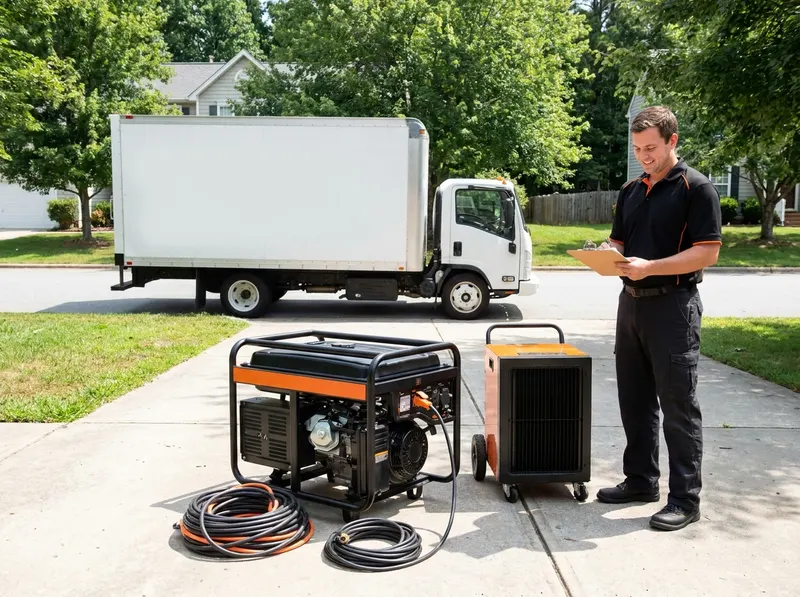
Temporary utility support separates high-efficiency job sites from stalled renovations when grid connections lag or emergency shutoffs hit active work zones. Operating in dense Raleigh core zones like Oakwood, Boylan Heights, and Five Points requires compact, sound-attenuated diesel units that supply continuous 120/240V split-phase or 208V 3-phase current without violating municipal ambient noise thresholds. For masonry work, hardwood floor acclimation, and drywall finishing in historic residential properties, unconditioned ambient moisture ruins materials within 48 hours; pairing a 70-pint or 150-pint commercial LGR dehumidifier with high-velocity air movers extracts structural humidity down to 40% relative humidity, stabilizing framing lumber before drywall installation begins. In sprawling multi-phase builds across Brier Creek and Wakefield, commercial general contractors deploy 70kVA to 100kVA towable units equipped with multi-voltage selector switches and 100-gallon internal fuel tanks to keep heavy power tools, table saws, and temporary site trailers energized without reliance on national rental broker networks that sub out delivery to unvetted third parties.
Selecting temporary climate hardware demands a strict calculation of cubic footage against thermal loss. For winter construction or early-stage residential renovations near North Hills and the Village District, an indirect-fired heater ducted from an exterior yard position delivers clean, dry heat devoid of combustion byproducts, preventing carbon monoxide buildup and moisture condensation inside closed building envelopes. The operational trade-off centers on fuel logistics versus equipment footprint: electric spot coolers eliminate exhaust piping entirely but require dedicated 30-amp or 50-amp circuits that smaller residential subpanels cannot support, while self-contained diesel-driven generator-cooler combinations require dedicated ground staging outside the drip lines of native hardwoods. Direct local dispatch establishes exact drop footprints upfront, ensuring delivery trucks drop heavy power skids cleanly on driveways using surface-protection cribbing without gouging asphalt, cracking aged concrete aprons, or obstructing active street traffic near Glenwood South and Mordecai.
Every job gets a firm, written price after a free on-site visit.
Tell us about your site power & climate equipment rental job in Raleigh and we'll send a clear, written quote, usually the same day.
 Hawk Hill Dumpster Rental